Precision
Casting
"... quality that exceeds expectations. Their availability to support us in every phase of the project was also greatly appreciated..."
Marco A. Bologna
At Exella, we transform your 3D models into compact, smooth, and precise three-dimensional metal components. We manufacture custom parts managing the entire production cycle, from 3D printing or vulcanization of rubber molds to casting and finishing of the piece.
What is lost-wax microcasting?
Thelost-wax microcasting(or precision casting) is a metallurgical technique that allows for the creation of complex three-dimensional metal components by pouring molten metal into a mold created around a sacrificial wax model. This process is ideal for achieving intricate geometries, fine details, and undercuts that would be impossible or too costly to produce using traditional CNC milling.
The Advantages of Precision Investment Casting
Choosing the lost-wax technique means overcoming the geometric limitations of traditional manufacturing:
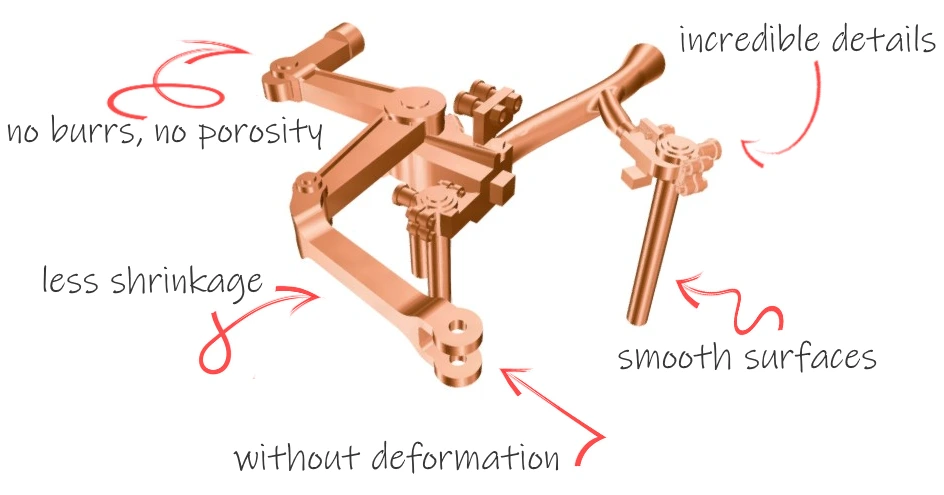
Complex three-dimensional geometries:It allows for the casting of components in a single piece that would otherwise require lengthy welding and assembly operations.
High-quality surfaces:The cast parts are compact, smooth, and free of porosity, optimized for subsequent plating treatments (gold plating, nickel plating).
Zero material waste:Unlike machining from solid, only the strictly necessary metal is used.
Scalable batches:Efficient process for both rapid prototyping and mass production.
Fields of Application and Sectors
We produce lead-free and cadmium-free components, perfect for sectors that require impeccable aesthetics and mechanical strength:
Eyewear:Hinges, three-dimensional decorations, and structural components for glasses.
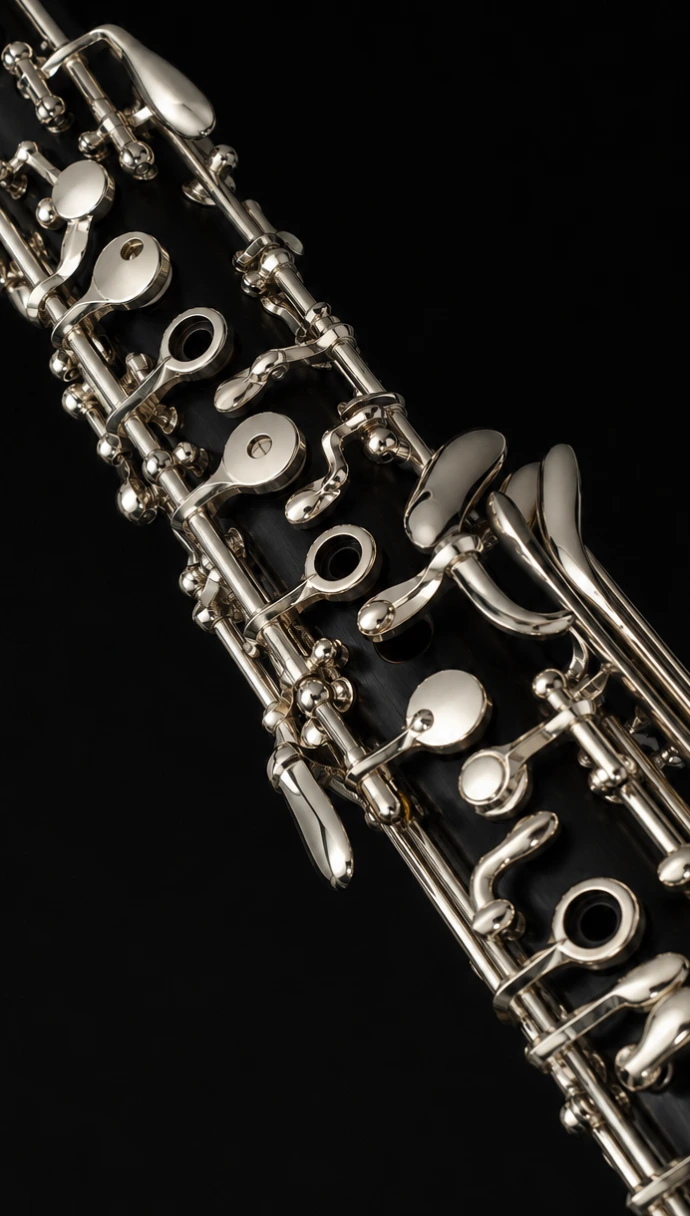
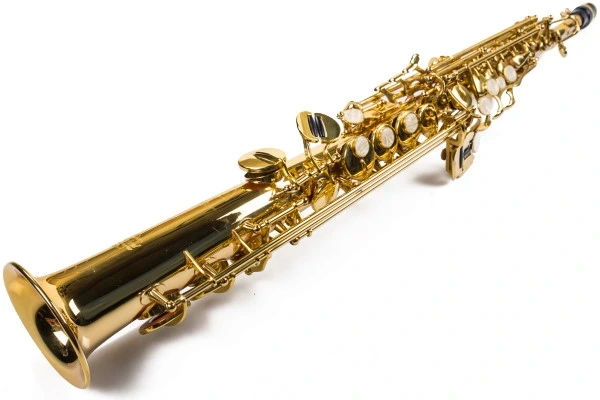
Musical Instruments: complex mechanisms and keywork for wind instruments (saxophone, oboe, clarinets).
Fashion Accessories and Leather Goods:High-quality buckles, closures for bags, and customized metal fittings.
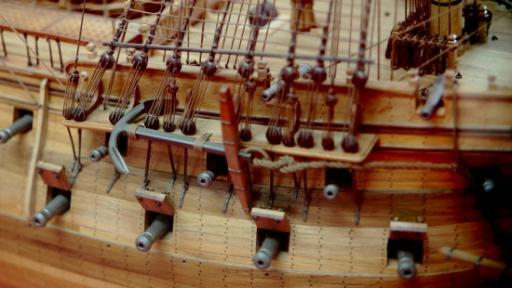
Modeling and Aesthetics: 3D details for reproductions in model railroading, decorations, and high-quality jewelry.
Alloys and Materials for Investment Casting
| Metal Alloy | Main Features | Subsequent Treatments |
| Brass | High smoothness, excellent rendering of fine details. | Ideal for all electroplating baths. |
| Nickel Silver | Natural silver color, high hardness, and corrosion resistance. | Mechanical polishing, plating treatments. |
| Bronze | Very high wear resistance and low friction coefficient. | Patination, bluing. |
| Tin (Pb-Free Alloy) | Low melting point, perfect for small objects and modeling. | Enameling, electroplating. |
Estimates and Production
Do you have a 3D file (STL, IGES, STEP) or a physical sample to reproduce? The cost of micro-casting depends on the weight of the finished piece, the type of alloy chosen, and the quantity of the batch.
Use our file upload system to send your 3D project. Our technicians will evaluate the metal shrinkage and the casting channels to provide you with an accurate quote.
👉Upload your files and calculate the price
Frequently Asked Questions (FAQ)
What file format is needed for micro-casting?
To start production, we accept 3D files such as .STL, .STEP, or .IGES. If you do not have a 3D model, we can start from a technical sketch or a physical sample (master) provided by you to create the initial rubber mold.
Are the alloys used hypoallergenic?
Yes, for the fashion, eyewear, and jewelry sectors, we exclusively use alloys that are strictly free of lead (Pb-Free) and cadmium, perfectly compliant with the European RoHS and REACH regulations for prolonged skin contact.
What is the difference between investment casting and die casting?
Die casting injects metal at high pressure into very expensive steel molds, suitable only for production runs of millions of pieces. Investment casting using lost-wax gravity or centrifugal casting utilizes inexpensive silicone rubber molds, making it perfect for small to medium batches with much more complex geometries (undercuts).
Ready to bring your project to life?
 Let's collaborate to create innovative solutions from prototype to mass production. Check our prices and contact us today, and let's build something extraordinary together.